What to Look for When Choosing a Metal Fabrication Partner
A late shipment from an unreliable fabricator can shut down a production line for weeks. Manufacturers who have scrambled to find a backup vendor after a supplier missed a deadline or shipped parts that failed inspection understand how much is riding on the choice of a metal fabrication partner.
Comparing quotes from local metal fabricators is only the first step. Equipment and capabilities, quality certifications, experience, design support, lead times, communication, location, and long-term partnership potential separate a dependable partner from one that causes headaches down the road.
Need a quote on your next project? Request a quote from Metaltech and hear back from our engineering team.
Why the Right Fabrication Partner Matters
Metal fabrication touches nearly every industry, from agriculture and construction to medical devices and defense. A fabricator who cuts corners on quality control, misses deadlines, or cannot scale with a growing order does not just create inconvenience. It can delay a product launch, void a certification, or damage a customer relationship downstream.
Vetting a partner before a purchase order is signed protects both the schedule and the budget. The sections below walk through what to check.
Capabilities, Equipment and ISO 9001 Certification
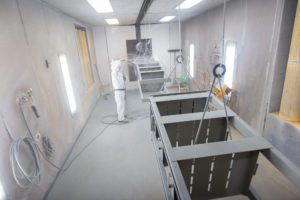
Start by asking what equipment a fabricator actually owns and operates in-house. Laser cutting, CNC machining, sheet metal forming, welding, and powder coating under one roof usually mean fewer handoffs, tighter tolerances, and shorter lead times than a shop that outsources half the job.
Certifications matter just as much as machinery. ISO 9001 is the internationally recognized standard for quality management systems, and a fabricator with current ISO 9001:2015 certification has a documented process for catching and correcting mistakes before parts ship.
- Cutting, forming, machining, welding, and finishing capacity in-house
- Current ISO 9001:2015 certification with a documented quality management system
- Industry-specific credentials, such as AWS welding certifications
Experience, Design Support and Communication
Capabilities and paperwork tell part of the story. How a fabricator works with customers day to day tells the rest.
Experience and Industry Expertise
A fabricator with 20-plus years in business has likely already solved production problems a newer shop has not yet encountered. Ask how long the company has operated, which industries it serves regularly, and whether it can share examples of similar projects.
Design Support and Project Management
The best partners get involved early, reviewing a design for manufacturability before the first part is cut. Look for a dedicated project manager or single point of contact who provides regular updates rather than leaving customers to track down status on their own.
Lead Times, Location and Long-Term Fit
Once quality and experience check out, the practical details determine whether the relationship works day to day.
- Ask for typical lead times on jobs similar to yours, and how the shop handles rush orders
- Weigh the value of a fabricator located close enough for an in-person facility tour
- Discuss capacity for repeat orders, and whether pricing and scheduling improve as the relationship grows
A fabricator willing to walk a prospective customer through its facility, rather than just its sales deck, is usually confident in what it can deliver.
Frequently Asked Questions About Choosing a Metal Fabrication Partner
What certifications should a metal fabrication partner have for data center equipment manufacturing?
Data center hardware often requires tight tolerances and dependable quality documentation. Look for ISO 9001:2015 certification at minimum, along with a fabricator experienced in enclosures, racks, and precision sheet metal work. Ask to see quality control records from past electronics infrastructure projects before committing.
What ISO certifications are essential when choosing a metal fabricator for medical devices?
Medical device components typically require ISO 9001 certification as a baseline, and some projects call for ISO 13485, the standard specific to medical device quality systems. Confirm which certifications a fabricator actually holds rather than relying on general claims of quality. A shop with documented traceability on materials and processes will make regulatory approval easier down the line.
How important is geographic proximity when selecting a metal fabricator for HVAC components?
Proximity affects shipping costs, lead times, and how easily a customer can visit the facility to review work in progress. For high-volume or bulky HVAC components, a regional metal fabricator often reduces freight expenses and shortens delivery windows compared to a shop on the other side of the country. It is not the only factor, but it should weigh into the decision alongside capabilities and certifications.
What should I look for in a metal fabrication partner’s structural steel capabilities?
Confirm the shop has cutting, forming, and welding equipment sized for structural steel, not just lighter sheet metal work. Ask about certified welding procedures, load-bearing project references, and whether the fabricator can handle fabrication and finishing, such as powder coating, under one roof. Metaltech’s in-house cutting, forming, and welding services cover projects at this scale, from initial design through finished product.
Ready to Choose a Fabrication Partner? Metaltech Has Delivered for Over a Quarter Century.
Vetting a metal fabrication partner takes time, but skipping the process costs more later. Metaltech has supported manufacturers across agriculture, construction, energy, and specialty industries for more than two decades, backed by ISO 9001:2015 certification and in-house capabilities across cutting, forming, machining, welding, and powder coating.
Learn more about Metaltech’s history and team, and browse the full range of services to see whether the capabilities match your project.
Request a quote to get started, or schedule a tour of the Lebanon, Missouri facility to see the process firsthand.